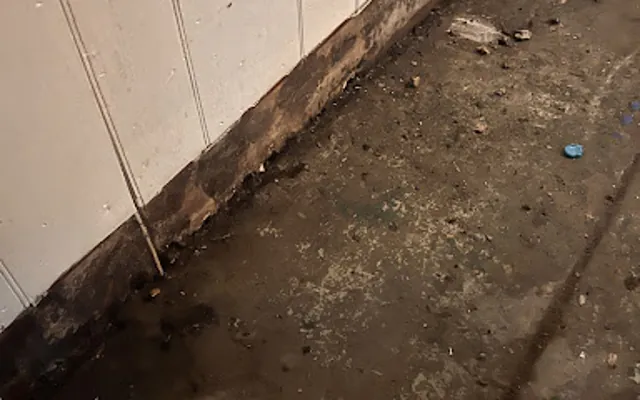
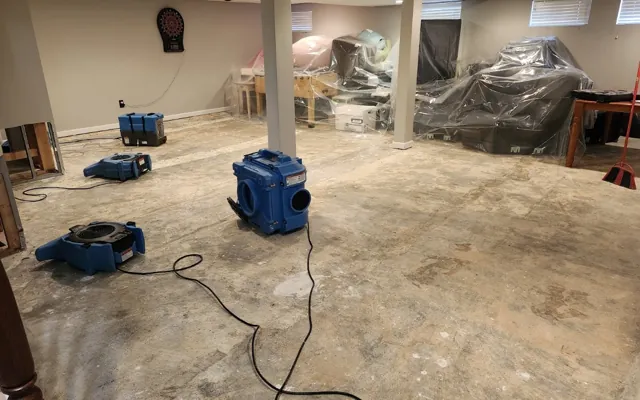
When a drain backup hits a Laurel School Historic District, CO home, local crews respond fast to contain the mess. They follow IICRC-standard methods to clean, disinfect, and dry the structure, protecting historic finishes.

Technicians first identify the backed-up line and classify the water. For a category 3 event in these historic homes, they establish containment to protect unaffected areas and original architectural details from contamination.
The team extracts all standing water from floors and lower areas. Any porous materials soaked by contaminated water are removed. Hard surfaces are then thoroughly cleaned and treated with antimicrobial solutions.
Using air movers and dehumidifiers, crews dry the structure to a precise moisture target. They log all readings to verify the home is dry, a critical step for the insurance claim in Laurel School Historic District.

Drain backup cleanup in Laurel School Historic District typically runs from about $600 to $4,000, depending on whether the water was gray or category 3 and how far it spread. A small, clean backup contained to one room is on the low end; a contaminated backup across a finished basement is on the high end. When a covered event is behind it, the loss is documented and billed direct to the carrier. Clearing the blockage itself is separate.
In the Laurel School Historic District, original plumbing from late-1800s homes meets aging sewer laterals, a common setup that can lead to drain backups. When contaminated water enters a cellar or living space, it requires immediate, careful handling to prevent damage to historic woodwork and finishes. Old cast iron pipes and century-old sewer connections under the district's streets are primary culprits. Roots from mature street trees can infiltrate these aging laterals, causing blockages that lead to backups, especially in homes with original drainage systems. From Laurel School Historic District, crews also cover nearby Westside Neighborhood, Eastside Neighborhood, Old Town, Campus West, Loomis Addition, Buckingham. See every neighborhood and town on the full service area page.
See all areas servedEvery loss is photographed, measured, and logged from the first visit, so the paperwork holds up with the insurance carrier.
Technicians follow recognized IICRC drying standards and prove it with daily moisture readings on Laurel School Historic District homes, not guesswork.
Emergency dispatch any hour of the day or night, with a real crew on the way across the Front Range, not a callback in the morning.
A real crew dispatched any hour, not a callback in the morning.
Trained technicians following recognized IICRC drying standards.
Truck-mounted, portable, and submersible for any size loss.
The loss is documented and billed to the carrier directly.
Costs depend heavily on the water category and affected area. A small, clean backup may start around a few hundred dollars. A widespread, contaminated backup in a finished basement in the Laurel School Historic District can reach several thousand. Most work is billed directly to insurance when it's a covered loss.
Drying times vary with the materials and extent of saturation. In historic districts with plaster and stone, it can take several days. Technicians use meters to track progress daily, ensuring the home reaches a verified dry standard before removing equipment.
Crews are on call 24 hours a day and can be on the way to Laurel School Historic District within the hour.
Call (970) 446-5005