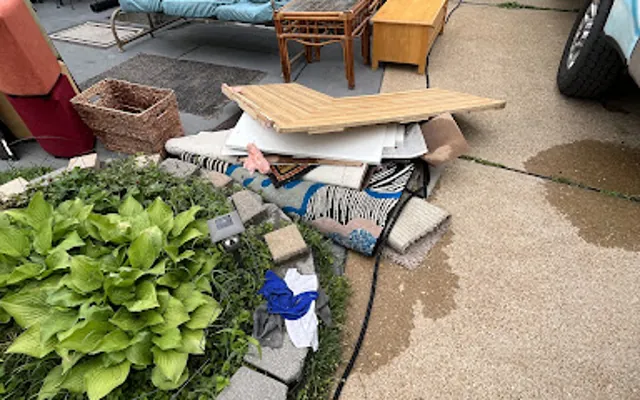
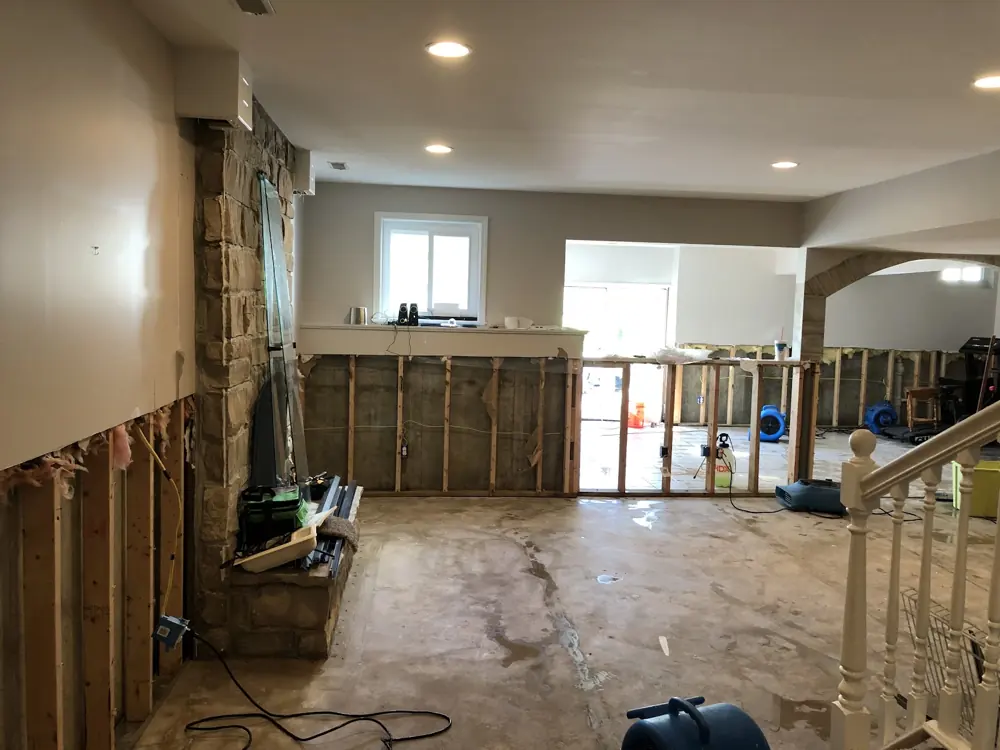
The big floods in Fort Collins come from the Cache la Poudre, fast spring snowmelt, and severe summer storms, not from the coast. When one puts water in a home, crews pump it out, muck out, and dry it.

The crew checks the property for electrical and structural hazards, confirms the water is receding, and maps how far the flood reached.
High-volume pumps clear the standing water, and mud, silt, and ruined porous materials are removed and hauled away.
Surfaces that contacted flood water are cleaned and treated with an antimicrobial, since overland flooding is handled as category 3.
Air movers and dehumidifiers dry the structure to a measured target, with readings logged for the insurance claim.

While help is on the way, these first steps, done only where it is safe, limit the damage and protect the insurance claim.
Shut the supply off at the source, or close the home's main valve if the source is not obvious. Stopping the flow limits the damage more than anything else.
Switch off electricity to the affected area, but only if the breaker can be reached without standing in or touching the water.
Get a crew dispatched right away. The sooner extraction and drying begin, the more flooring, drywall, and belongings can be saved.
Take photos and a short video of the water and the affected rooms before anything is moved, so the insurance claim starts strong.
River and snowmelt flood cleanup in Fort Collins typically runs from about $2,500 to $9,000 or more, driven by how deep the water got, how much mud and contaminated material came with it, and how much has to be removed and rebuilt. A contained lower-level flood is on the low end; several feet of muddy water through finished space is on the high end. Overland flooding usually needs a separate flood policy, and the loss is documented in detail for the carrier.
Crews reach Fort Collins, Larimer County, and the nearby northern Front Range fast, from Old Town, Midtown, and Campus West to Laporte, Wellington, Loveland, Windsor, and Timnath. See the full list on the areas served across Fort Collins page.
See all areas servedEvery loss is photographed, measured, and logged from the first visit, so the paperwork holds up with the insurance carrier.
Technicians follow recognized IICRC drying standards and prove it with daily moisture readings on Fort Collins homes, not guesswork.
Emergency dispatch any hour of the day or night, with a real crew on the way across the Front Range, not a callback in the morning.
A real crew dispatched any hour, not a callback in the morning.
Trained technicians following recognized IICRC drying standards.
Truck-mounted, portable, and submersible for any size loss.
The loss is documented and billed to the carrier directly.
Yes, though not from hurricanes. The risks here are the Cache la Poudre running high, fast spring snowmelt off the foothills, and severe summer storms, as the 1997 and 2013 floods showed.
Overland flood water is category 3, carrying mud, sewage, and contaminants, so it needs protective gear, disinfection, and removal of porous materials. It is not a mop-and-bucket job.
Low-lying areas near the Poudre, including the Tres Colonias neighborhoods behind the levee, and any home on a floodplain or low ground carry the most exposure during high water.
Usually not on its own. Overland flooding typically requires a separate flood policy, while storm damage to the structure may be covered. The loss is documented to fit whichever applies.
As soon as it is safe. Standing flood water and mud keep damaging the structure and feeding mold, so fast pump-out and drying limit the loss.
Fort Collins crews are on call 24 hours a day, local and fast, and can be on the way within the hour.
Call (970) 446-5005