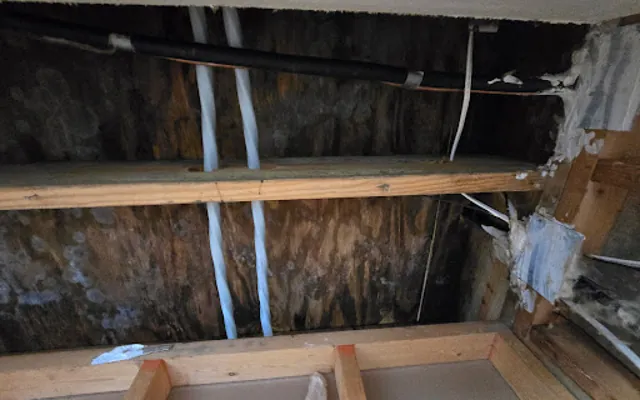
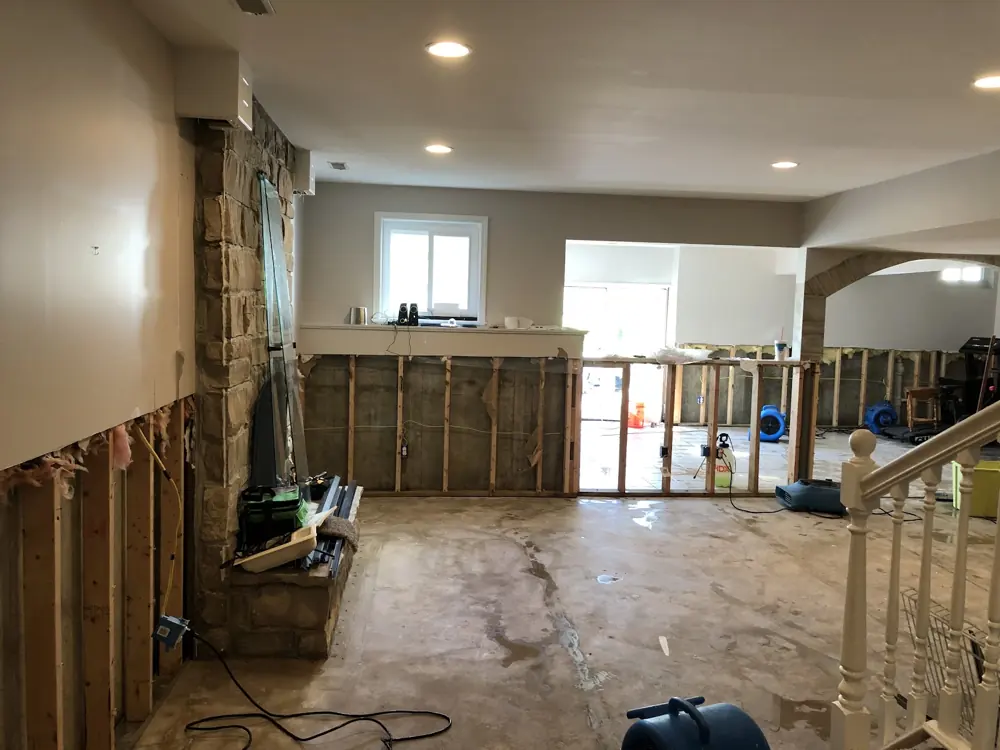
Fort Collins roofs take a beating from hail and wind-driven summer storms. When a leak soaks the attic and ceiling, crews find the water, dry the structure, and stop it from spreading downward.

The crew finds where the water is entering and traveling, and tarps or covers the roof opening so no more comes in during drying.
Pooled water above a ceiling is drained safely, and saturated ceiling or insulation is removed where it cannot be dried in place.
Air movers and dehumidifiers dry the attic framing, insulation, and ceiling cavity to a measured target.
Readings confirm the structure is dry, and the loss is photographed and logged for the insurance claim.

While help is on the way, these first steps, done only where it is safe, limit the damage and protect the insurance claim.
Shut the supply off at the source, or close the home's main valve if the source is not obvious. Stopping the flow limits the damage more than anything else.
Switch off electricity to the affected area, but only if the breaker can be reached without standing in or touching the water.
Get a crew dispatched right away. The sooner extraction and drying begin, the more flooring, drywall, and belongings can be saved.
Take photos and a short video of the water and the affected rooms before anything is moved, so the insurance claim starts strong.
Roof leak water damage cleanup in Fort Collins typically runs from about $1,000 to $5,000, depending on how long it leaked and how much attic, insulation, and ceiling were soaked. A small, freshly caught leak is on the low end; a storm leak that ran through insulation and stained ceilings across several rooms is on the high end. Sudden storm damage is usually covered, and the water cleanup is documented and billed direct to the carrier. The roof repair is separate.
Crews reach Fort Collins, Larimer County, and the nearby northern Front Range fast, from Old Town, Midtown, and Campus West to Laporte, Wellington, Loveland, Windsor, and Timnath. See the full list on the areas served across Fort Collins page.
See all areas servedEvery loss is photographed, measured, and logged from the first visit, so the paperwork holds up with the insurance carrier.
Technicians follow recognized IICRC drying standards and prove it with daily moisture readings on Fort Collins homes, not guesswork.
Emergency dispatch any hour of the day or night, with a real crew on the way across the Front Range, not a callback in the morning.
A real crew dispatched any hour, not a callback in the morning.
Trained technicians following recognized IICRC drying standards.
Truck-mounted, portable, and submersible for any size loss.
The loss is documented and billed to the carrier directly.
Often, but not always. Water travels, so a stain can come from the roof, a pipe, or condensation. The crew traces it to the real source before drying so it does not come back.
Crews handle the water cleanup, drying, and temporary tarping. A roofer makes the permanent repair, and the work is coordinated so drying finishes once the roof is sealed.
Only from a safe position if it is about to fail, since a water-filled ceiling can collapse. It is safer to keep people out of the room and let the crew drain it in a controlled way.
Sudden storm or hail damage is usually covered, including the interior water damage. A roof that failed from age or neglect may not be. The loss is documented to fit the coverage.
Trapped moisture in insulation and framing can start feeding mold within a couple of days, which is why fast drying and removing soaked insulation matter.
Fort Collins crews are on call 24 hours a day, local and fast, and can be on the way within the hour.
Call (970) 446-5005