Frozen pipe water damage in Andersonville, CO, requires immediate response to prevent structural harm. Local crews follow IICRC-standard methods to extract water and dry the property thoroughly, helping to get things back to normal quickly.

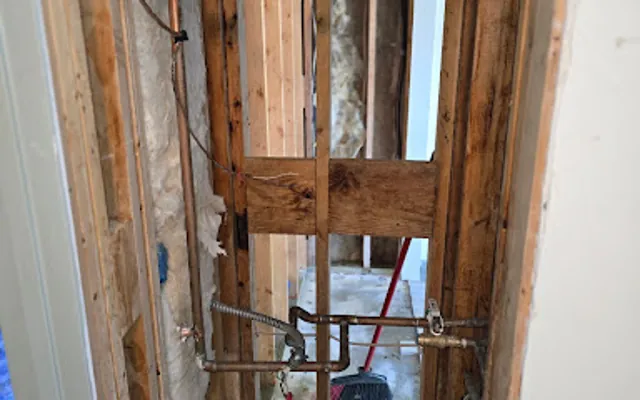
Technicians first shut off the water supply to the home. They then locate the split pipe, which in Andersonville's older homes is often found in unheated crawlspaces or along exterior walls where the cold penetrates most easily.
The crew uses extractors to pull thawed water from floors and carpets. They also open wet wall and ceiling cavities in the small frame homes to ensure all trapped moisture can drain and be removed effectively.
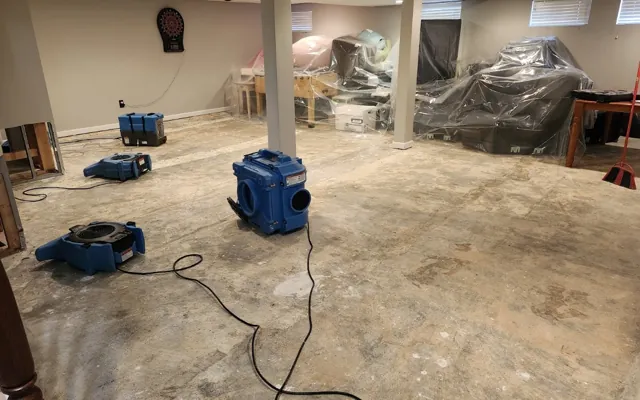
Air movers and dehumidifiers are set up to dry the framing, insulation, and hidden voids. Crews take moisture readings to hit a target dryness level, crucial as water from a freeze often hides out of sight.

Frozen pipe water damage in Andersonville typically runs from about $1,000 to $4,500, depending on how long the pipe ran after thawing and how much wall, floor, and insulation were soaked. A pipe caught fast in a crawlspace is on the low end; a line that ran through two levels of a vacant home is on the high end. Sudden freeze bursts are usually covered when the home was reasonably heated, and the loss is documented and billed direct to the carrier.
Andersonville's historic frame homes, built in the early 1900s on low ground near the Poudre River, are particularly vulnerable to water intrusion. Even a minor pipe burst from a freeze can quickly push water into living spaces, where it soaks into old floors and walls. This makes prompt, professional drying critical to prevent lasting damage in these older structures. The combination of Andersonville's high-altitude, semi-arid climate with sharp freezes and its older homes on low ground creates a perfect storm for frozen pipes. Water from a burst line can spread rapidly through these historic structures, requiring specialized drying. From Andersonville, crews also cover nearby Alta Vista, Sheely Drive Historic District, Old Town North, Midtown, Buckingham, Campus West. See every neighborhood and town on the full service area page.
See all areas servedEvery loss is photographed, measured, and logged from the first visit, so the paperwork holds up with the insurance carrier.
Technicians follow recognized IICRC drying standards and prove it with daily moisture readings on Andersonville homes, not guesswork.
Emergency dispatch any hour of the day or night, with a real crew on the way across the Front Range, not a callback in the morning.
A real crew dispatched any hour, not a callback in the morning.
Trained technicians following recognized IICRC drying standards.
Truck-mounted, portable, and submersible for any size loss.
The loss is documented and billed to the carrier directly.
In most cases, yes, if the home was reasonably heated and the loss is sudden and accidental. Insurance typically covers the resulting water damage. Local restoration crews document the loss thoroughly to support the claim, which is often billed directly to the carrier.
Drying time depends on the extent of the soak and the materials involved. For a typical burst in an Andersonville frame home, the active drying phase often takes 3 to 5 days. Technicians use meters to verify all cavities and materials meet dryness standards before removing equipment.
Crews are on call 24 hours a day and can be on the way to Andersonville within the hour.
Call (970) 446-5005